How Film Faced Plywood Affects Concrete Surface Finish
Introduction
Film faced plywood concrete finish is influenced by far more than the color of the panel. The film surface acts as the mold face for fresh concrete, so every scratch, joint, fastener mark, contaminant, and alignment error can be reflected in the finished surface. Buyers and contractors who want clean concrete need to control both panel quality and formwork workmanship.
Surface Smoothness and Film Consistency
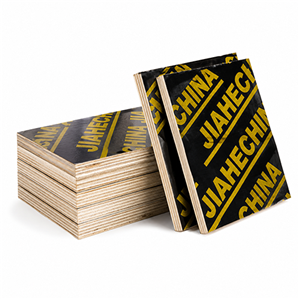
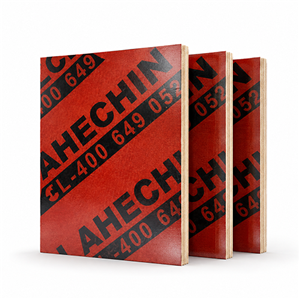
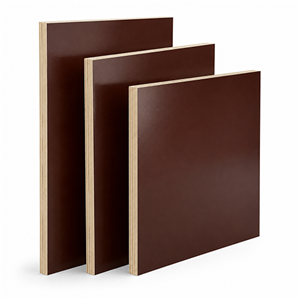
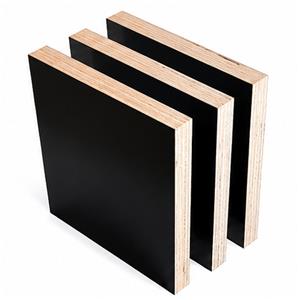
A uniform film provides a consistent contact surface and can reduce visible wood grain compared with uncoated plywood. The film should be well bonded and free from large wrinkles, bubbles, tears, or patches. A new high-quality panel can still produce defects if it is dirty or damaged before pouring. Protect the working face during transport and assembly.
Panel Joints and Thickness Variation
Even a perfect surface will show joint lines if panels do not meet accurately. Thickness variation between adjacent sheets can create steps in the concrete. Out-of-square panels can open gaps or force installers to adjust the form. This is why dimensional tolerance is part of concrete-finish control. Film faced plywood sizes and thicknesses explains how to specify these parameters.
Release Agent Application
Release agents help separate cured concrete from the formwork, but application must be controlled. Uneven coverage, excessive product, incompatible chemistry, or contamination can create discoloration or surface variation. Follow the release-agent manufacturer's instructions and test the combination when appearance is critical. The plywood surface should be clean before application.
Fasteners, Tie Holes and Repairs
Fastener heads, tie systems, patched holes, and repaired film can all leave visible marks. Architectural concrete projects often use planned patterns so these marks become part of the design. For standard structural work, the goal is usually to minimize irregular marks and prevent leakage at openings. Use consistent fixing methods and repair damaged areas before the next pour.
Reuse Changes the Surface
Each concrete cycle creates wear. Fine scratches, edge damage, localized film loss, or hardened residue can gradually affect the concrete finish. Inspect panels after stripping and separate them by condition. Panels no longer suitable for exposed architectural faces may still be usable in less visible formwork. How to extend film faced plywood service life provides maintenance practices that preserve surface quality.
Choosing Panels for High-Finish Concrete
For projects where appearance is critical, approve a representative panel sample and conduct a mock-up pour. Specify film type, surface texture, panel dimensions, thickness tolerance, joint treatment, release agent, and acceptable concrete finish. The contractor's formwork workmanship is just as important as the panel. A trial confirms the complete system before large areas are cast.
Conclusion
Film faced plywood concrete finish is the result of panel surface quality plus installation and site control. Uniform film, accurate dimensions, clean faces, correct release agent, careful joints, and planned reuse all contribute to a better result. When the finish matters, treat the plywood as part of the architectural surface system rather than a disposable construction sheet.