Film Faced Plywood vs Ordinary Plywood for Concrete Formwork
Introduction
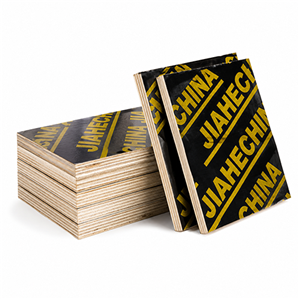
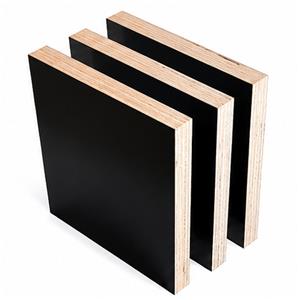
The comparison of film faced plywood vs plywood is really a comparison between a purpose-built formwork surface and a general wood panel. Both products are made from bonded veneer layers, but film faced panels add a resin-treated overlay that changes how the surface interacts with wet concrete, release agents, cleaning, and repeated site use. Whether the added cost is worthwhile depends on the application.
Surface Contact with Concrete
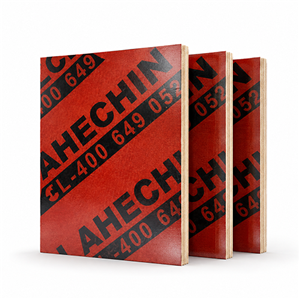
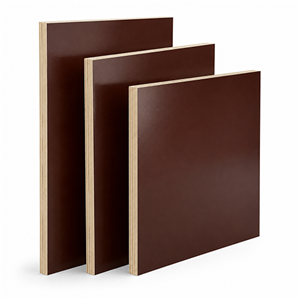
Ordinary plywood exposes a wood veneer surface to the concrete unless it has another coating. Moisture can raise fibers, stain the surface, and make cleaning more difficult. Film faced plywood places a dense overlay between the wood and concrete, which can improve release and create a more uniform surface when the panel is in good condition. This is a major reason formwork contractors use film faced panels for repeated work.
Moisture Exposure
The film protects the faces but does not make the entire panel invulnerable to water. Edges, cut sections, holes, and damaged areas still need protection. Ordinary plywood can also be manufactured with moisture-resistant bonding, but its face is more exposed to direct wear. When the formwork will see repeated wet cycles, a suitable film faced plywood construction often provides a more practical working surface. See waterproof film faced plywood explained.
Concrete Finish and Cleaning
A smooth, intact film can help produce a cleaner concrete surface and make residual cement paste easier to remove. Ordinary wood faces may transfer grain texture or surface defects to the concrete and can deteriorate faster after repeated cleaning. If the final concrete will be hidden, this may not matter. If architectural appearance or reduced finishing work is important, the formwork face becomes more valuable. Film faced plywood concrete finish guide explores this topic in detail.
Reuse and Cost per Use
Film faced plywood usually costs more than basic ordinary plywood, but the relevant metric is cost per use. If the panel can be cleaned, protected, and reused within the project system, the higher purchase price may be offset by lower replacement and labor costs. For one-time temporary forms, ordinary plywood or a lower-grade formwork panel may be sufficient. Buyers should match product grade to the expected number of cycles.
When Ordinary Plywood May Be Enough
Ordinary plywood can be suitable for non-critical temporary work, packaging, protection, or forms where surface appearance is unimportant and reuse is limited. It may also be coated or lined with another material. The decision should consider engineering requirements, bonding, thickness, surface treatment, and local construction practice. Never assume that any ordinary plywood is structurally suitable for formwork without checking the specification.
Conclusion
In film faced plywood vs plywood decisions, the film overlay provides the main practical advantage for concrete contact: a more durable, cleanable working face. The core and bonding still determine much of the structural performance. For repeated concrete formwork, a properly specified film faced panel is usually the more purpose-built option; for low-demand temporary work, ordinary plywood may be economical when technically suitable.