Film Faced Plywood: A Complete Guide for Concrete Formwork Buyers
Introduction
Film faced plywood is one of the most widely used panel materials for concrete formwork because it combines a strong plywood core with a resin-impregnated surface film. The film helps create a smoother contact surface, reduces direct moisture penetration, and makes the panel easier to clean after concrete casting. For importers, contractors, distributors, and formwork companies, however, two panels that look similar can perform very differently. Core construction, veneer quality, adhesive, film weight, edge sealing, pressing quality, thickness tolerance, and site handling all influence the final result. This guide explains the main factors buyers should understand before comparing suppliers or placing an order.
What Is Film Faced Plywood?
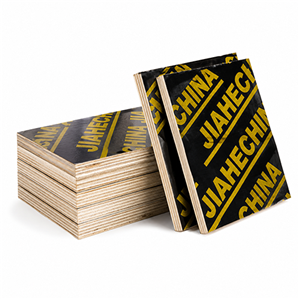
Film faced plywood is a structural plywood panel whose outer faces are overlaid with a durable resin-treated film, commonly a phenolic film. During hot pressing, the film bonds to the plywood surface and creates a dense, relatively smooth layer that is suitable for repeated contact with wet concrete. The product is also commonly described as formwork plywood, shuttering plywood, or phenolic plywood in international trade. These terms can overlap, so a buyer should confirm the actual construction rather than rely only on the product name. A useful starting point is to compare the difference between film faced plywood and ordinary plywood before evaluating individual grades.
Core, Glue and Film: The Three Main Performance Factors
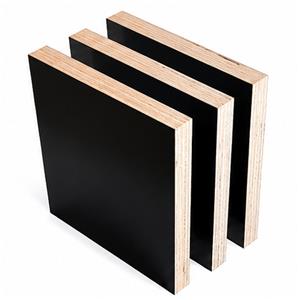
The core determines much of the panel's strength, flatness, weight, and resistance to internal gaps. Poplar is valued for light weight and cost efficiency, eucalyptus for higher density and strength, while birch is often selected for demanding applications. Combi cores combine species to balance cost and performance. Adhesive quality is equally important because the veneers must remain bonded when exposed to construction-site moisture. The surface film protects the faces, but it cannot compensate for poor internal bonding. Film weight, resin quality, and surface consistency influence wear resistance and concrete release. For a deeper comparison, see poplar vs eucalyptus vs birch core film faced plywood.
Why Contractors Use It for Concrete Formwork
In concrete formwork, the panel must support fresh concrete, stay dimensionally stable, and release from the cured surface without excessive damage. A well-made film faced plywood panel can produce a clean concrete finish and simplify stripping and cleaning. Reuse is possible when the panel edges, screw holes, and cut sections are protected and the panel is not abused during removal. The number of reuses is never determined by the film alone; formwork design, spacing of supports, concrete pressure, release agent, weather, cleaning method, and storage all matter. Buyers planning high-reuse systems should read how many times film faced plywood can be reused before setting performance expectations.
Common Sizes and Specifications
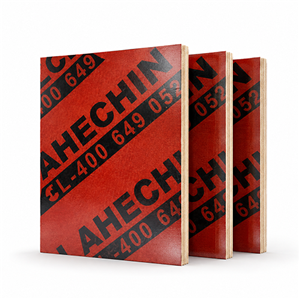
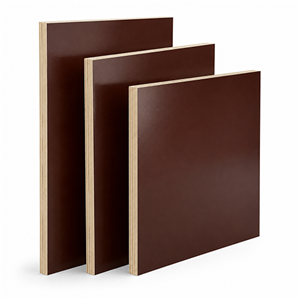
International buyers commonly request 1220 x 2440 mm panels, although other dimensions are available for regional formwork systems. Popular thicknesses include 12 mm, 15 mm, 18 mm, and 21 mm. Thickness should be selected according to support spacing, concrete pressure, loading method, and engineering requirements rather than price alone. Face colors are commonly black or brown, but color is not a reliable indicator of quality. What matters more is the film specification, core quality, bonding, calibration, and edge treatment. If your project uses standard modular forms, film faced plywood sizes and thicknesses can help narrow the most practical option.
How to Evaluate a Supplier
Ask for a clear specification sheet that identifies core species, veneer construction, adhesive type, film weight, panel size, thickness tolerance, density or weight range, moisture target, edge sealing, and packing method. Request close-up photos of the edges and core, not only polished surface photos. For large orders, approve a sample or pre-production panel and document the acceptance standard. A reliable supplier should be able to explain why one grade is suitable for a particular job instead of simply describing every panel as 'waterproof' or 'high quality.' Use a structured film faced plywood quality inspection checklist when comparing samples.
Conclusion
The best film faced plywood is not necessarily the heaviest, darkest, or most expensive panel. It is the grade whose core, bonding, film, tolerances, and handling requirements match the intended formwork system. Buyers who define their application first can compare quotations more accurately and avoid paying for specifications they do not need. When requesting a quotation, provide your required dimensions, thickness, core preference, film color, expected application, packing requirements, destination port, and estimated order volume. This gives the manufacturer enough information to recommend a realistic grade and price.