Phenolic Film Faced Plywood: What Construction Buyers Need to Know
Introduction
Phenolic film faced plywood is commonly used as a concrete formwork panel because its resin-treated face provides a dense working surface over the plywood core. In international trade, the term 'phenolic plywood' is sometimes used broadly, so buyers should confirm whether it refers to a phenolic film overlay, a phenolic adhesive system, or both. A precise specification prevents confusion and helps suppliers quote comparable products.
What Is the Phenolic Film?
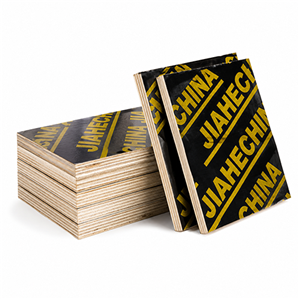
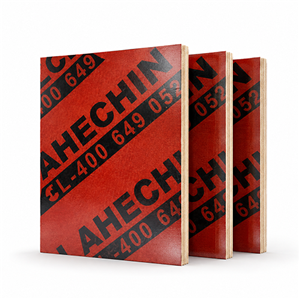
The face film is a paper-based overlay impregnated with resin and bonded to the plywood under heat and pressure. Once cured, it forms a hard surface that can resist routine construction-site moisture and abrasion better than bare wood veneer. Film weight and resin treatment influence surface durability, but heavier film does not automatically guarantee a better panel if the core or bonding is weak.
Why It Is Used for Formwork
The film can reduce direct contact between wet concrete and the wood surface, simplify cleaning, and support a smoother concrete finish. It can also reduce the tendency of fibers to raise or splinter on the face compared with uncoated plywood. The panel still needs proper release-agent use, careful stripping, edge protection, and correct storage. Buyers should view phenolic film faced plywood as a system of core plus bonding plus film, not as a surface coating alone.
Film Weight and Surface Quality
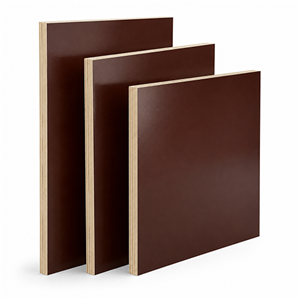
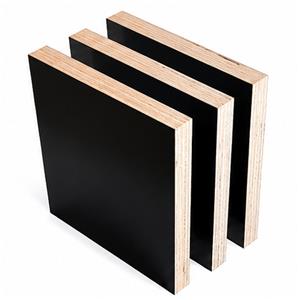
Suppliers may describe film weight in grams per square meter. Higher weights can provide more material on the surface, but resin quality, impregnation, pressing, and paper quality also matter. A consistent film should be well bonded without large bubbles, wrinkles, loose corners, or obvious patches. Surface texture may be smooth or patterned depending on the intended use. For standard concrete formwork, smooth film is common. Compare black film faced plywood vs brown film faced plywood if your market specifies a color.
Moisture Resistance Has Limits
The word 'phenolic' does not make the entire panel immune to water. The film protects the faces, while the plywood edges, cut lines, drill holes, and damaged areas remain possible paths for moisture. Internal bond quality is also critical. Resealing cut edges and avoiding long-term standing water can significantly reduce damage risk. Waterproof film faced plywood explained discusses why 'moisture resistant' is usually a more useful purchasing concept than a simple waterproof label.
Questions to Ask a Supplier
Ask what film is used, the stated film weight, whether both faces are overlaid, what core construction is underneath, what adhesive system is used, how the edges are sealed, and what thickness tolerance is controlled. Request sample photos of the surface and cut edge. For large or repeat orders, approve a physical reference panel and include the agreed specification in the purchase order. This prevents the product from being reduced to a vague description such as 'brown phenolic board.'
Conclusion
Phenolic film faced plywood can be an efficient and durable formwork material when the surface film is matched with a strong, well-bonded core. Buyers should compare complete panel construction and factory control, not only film color or marketing terminology. A detailed specification is the best way to make quotations comparable and protect consistent quality across shipments.