How Many Times Can Film Faced Plywood Be Reused?
Introduction
Film faced plywood reuse is one of the first questions asked by contractors and importers. It is also one of the hardest questions to answer with a single number. The same panel grade can last for very different numbers of pours depending on formwork design, cutting, handling, release agent, stripping method, concrete conditions, weather, cleaning, and storage. A realistic evaluation therefore focuses on the factors that control reuse rather than a guaranteed cycle count.
Why Reuse Numbers Vary
A panel used as a large wall form with protected edges may experience relatively uniform wear. The same panel cut into small pieces for foundations can expose more edges and fastener holes to moisture. Aggressive prying during stripping can damage the film after only a few cycles, while careful release and cleaning can preserve it much longer. Concrete mix, curing time, surface contamination, and site temperature can also affect removal.
Core and Bonding Matter as Much as Film
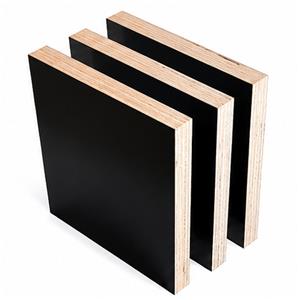
The film is the first contact surface, but reuse also depends on whether the veneers remain bonded and the panel stays flat. Internal voids, poor joints, high veneer moisture, or weak bonding can cause local swelling or delamination. A strong core with consistent thickness gives the film a stable base. This is why buyers should combine a surface inspection with a cut-edge inspection. Film faced plywood core comparison explains the main core options.
Protect Cut Edges and Holes
Factory edge paint helps protect the original perimeter, but once a panel is cut, the new edge is exposed. Reseal cut edges promptly using a compatible coating recommended by the supplier or formwork system provider. Drill holes and damaged corners also deserve attention. Moisture entering through unprotected areas can reach the veneer structure and reduce service life even when the face film still looks good.
Use the Right Release and Stripping Practice
Apply a suitable concrete release agent in a thin, even layer. Excessive or incompatible release agents can create surface issues, while too little may make stripping harder. Remove forms at the appropriate time for the concrete and formwork design. Use tools and stripping methods that separate the panel without gouging the film or crushing edges. Avoid hammering directly on the working face. See how to extend film faced plywood service life for a complete maintenance routine.
Clean, Dry and Store Correctly
After stripping, remove concrete residue before it hardens excessively, but do not use cleaning methods that scratch the film. Allow panels to dry and stack them flat on level supports, protected from prolonged sun, rain, and standing water. Keep bundles off the ground. If panels are stored wet and tightly stacked for long periods, moisture can remain trapped and affect the plywood.
How Buyers Should Specify Reuse
Instead of purchasing solely on a promised reuse number, define the application and ask suppliers to propose grades at different performance levels. Conduct a site trial where possible and record the number of usable cycles under your own working conditions. For repeat procurement, actual project data is more valuable than a generic sales claim. Combine it with film faced plywood quality inspection to keep incoming quality consistent.
Conclusion
Film faced plywood reuse cannot be reduced to one universal number. Panel construction sets the potential, while site practice determines how much of that potential is realized. Buyers who protect edges, use suitable release agents, strip carefully, clean promptly, and store panels correctly can often achieve significantly better value from the same formwork grade.