How to Choose Film Faced Plywood for Construction Projects
Introduction
If you are learning how to choose film faced plywood, start with the project rather than the supplier catalog. The right panel for a residential slab may be different from the right panel for a high-rise wall, bridge form, precast operation, or rental formwork system. Buyers can make better decisions by defining the structural demand, target concrete finish, reuse expectation, labor practice, climate, and budget before selecting a grade.
1. Define the Formwork Application
List where the plywood will be used: slabs, walls, columns, beams, foundations, precast molds, or temporary site work. Vertical wall forms and horizontal slab forms impose different loading and handling patterns. Curved or frequently cut forms may need different core characteristics from large flat panels. Your engineering team should determine support spacing and panel thickness requirements. This step prevents a common buying mistake: selecting a grade only because another contractor uses it on a different project.
2. Choose the Core Construction
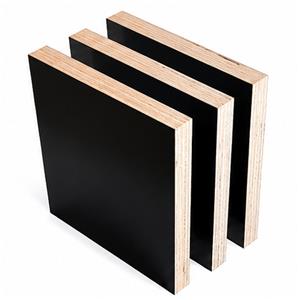
Core species affects stiffness, weight, screw holding, edge quality, and price. Poplar is generally lighter and economical. Eucalyptus is denser and can provide stronger mechanical properties. Birch is often chosen for premium or demanding formwork. Combi cores can balance these features. But species is only part of the answer. Veneer thickness, scarfing or joint quality, void control, moisture, pressing, and calibration are just as important. Use film faced plywood core comparison when evaluating core options.
3. Evaluate the Film and Bonding
The surface film should be uniform, well bonded, and free from obvious delamination, blistering, or large defects. Ask for the film type and weight rather than judging by color. The adhesive system between veneers must be suitable for the expected moisture exposure. A simple field check can reveal major bonding problems, but laboratory testing is more reliable when a project has strict requirements. If a supplier advertises 'waterproof plywood,' ask what test method or performance basis supports that claim. Read waterproof film faced plywood explained for a more precise way to discuss moisture resistance.
4. Select Thickness and Tolerance
Nominal thickness does not tell the whole story. Two panels marked 18 mm can differ in actual thickness and uniformity. Inconsistent thickness can affect form alignment and concrete finish, especially when panels are joined side by side. Specify a practical tolerance that your formwork system can accept and check multiple points on sample panels. Buyers should also confirm length, width, squareness, and diagonal difference. Film faced plywood sizes and thicknesses provides a useful specification reference.
5. Set a Realistic Reuse Target
How to choose film faced plywood also depends on how many casting cycles you expect and how carefully the panels will be managed. A contractor that cuts panels once and uses them for foundations has a different need from a rental company that expects repeated wall-form cycles. Reuse is influenced by edge sealing, stripping method, release agent, cleaning, storage, fastener placement, and concrete conditions. Rather than buying a vague 'high-reuse' grade, define the site practices that will protect the panels.
6. Compare Total Cost, Not Sheet Price
Price per sheet is easy to compare, but cost per use is often more meaningful. A slightly higher-priced panel can be economical if it reduces surface repairs, labor, replacement frequency, or formwork downtime. On the other hand, a premium panel may be unnecessary for a one-time temporary application. Ask suppliers to quote multiple constructions against the same specification and explain the differences. The article what determines film faced plywood price can help you interpret quotations.
Conclusion
The most effective method for how to choose film faced plywood is to turn your project requirements into a written purchase specification. Define application, size, thickness, tolerance, core, film, bonding, edge sealing, packing, and acceptance criteria. Then evaluate samples and supplier quality control against those requirements. This process makes supplier comparison faster, reduces misunderstandings, and gives both buyer and manufacturer a clear standard for production.