Film Faced Plywood Quality Inspection Checklist for Buyers
Introduction
Film faced plywood quality is difficult to judge from a polished product photo. The most important features include internal veneer construction, bonding, thickness consistency, flatness, film adhesion, edge protection, and batch control. Importers and contractors can reduce purchasing risk by using a repeatable inspection checklist for samples, production, and pre-shipment inspection.
1. Verify Product Identification
Confirm that the sample or shipment matches the purchase order: size, thickness, core type, face color, film specification, edge color, brand marking, and packing. If multiple grades are produced in the same factory, batch labeling is important. Keep an approved reference sample so the inspection team can compare production against the same benchmark.
2. Measure Dimensions and Squareness
Measure length and width at more than one point. Check panel diagonals to evaluate squareness. Measure thickness at corners and center positions using calibrated tools. Record minimum, maximum, and average values rather than relying on a single reading. Thickness variation can create steps at panel joints and affect the concrete surface. See film faced plywood sizes and thicknesses for common specification points.
3. Inspect the Film Surface
Look for bubbles, wrinkles, delamination, tears, excessive scratches, contamination, color inconsistency, patches, and damaged corners. The surface should be evenly bonded. A glossy appearance may be attractive but should not replace technical checks. If architectural concrete is required, inspect the exact working face and carry out a trial pour when practical. How film faced plywood affects concrete finish explains the relationship between panel condition and surface appearance.
4. Inspect the Edges and Core
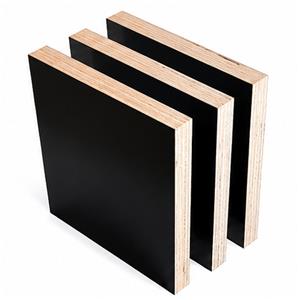
The cut edge reveals details that the face hides. Check for voids, open veneer joints, overlaps, splits, weak patches, and large gaps. Look for consistent veneer layers and bonding. Edge paint should cover the original perimeter without obvious missing areas. If the panel is supplied with a poplar, eucalyptus, birch, or combi core, compare the observed construction with the specification.
5. Check Flatness and Panel Feel
Place panels on a flat surface or compare several sheets in a stack. Excessive bowing, twisting, or local distortion may cause formwork alignment problems. Handle several sheets to notice unusually large weight differences, which can indicate variation in density or moisture. Weight alone is not a quality grade, but consistency within a batch can be a useful signal.
6. Review Bonding and Moisture-Resistance Evidence
Ask the supplier what adhesive system is used and what internal or third-party tests are available. If your project has specific standards, state them in the contract and use the appropriate test method. Avoid accepting vague terms such as '100% waterproof' without a defined requirement. A panel's exposed edges and damaged areas can still absorb moisture even when the face film performs well.
7. Inspect Packing and Container Loading
Check sheet count per bundle, pallet condition, straps, waterproof wrapping, corner protection, labels, and container bracing. Poor packing can damage good panels during ocean transport. Make sure bundles are loaded to avoid excessive movement and crushing. For international buyers, film faced plywood packing and shipping guide provides a more detailed loading checklist.
Conclusion
A strong film faced plywood quality program combines a written specification, approved sample, measurable tolerances, visual standards, and pre-shipment inspection. The goal is not to find a perfect-looking sheet; it is to confirm that the entire batch is suitable for the intended formwork application and consistent with the product that was ordered.